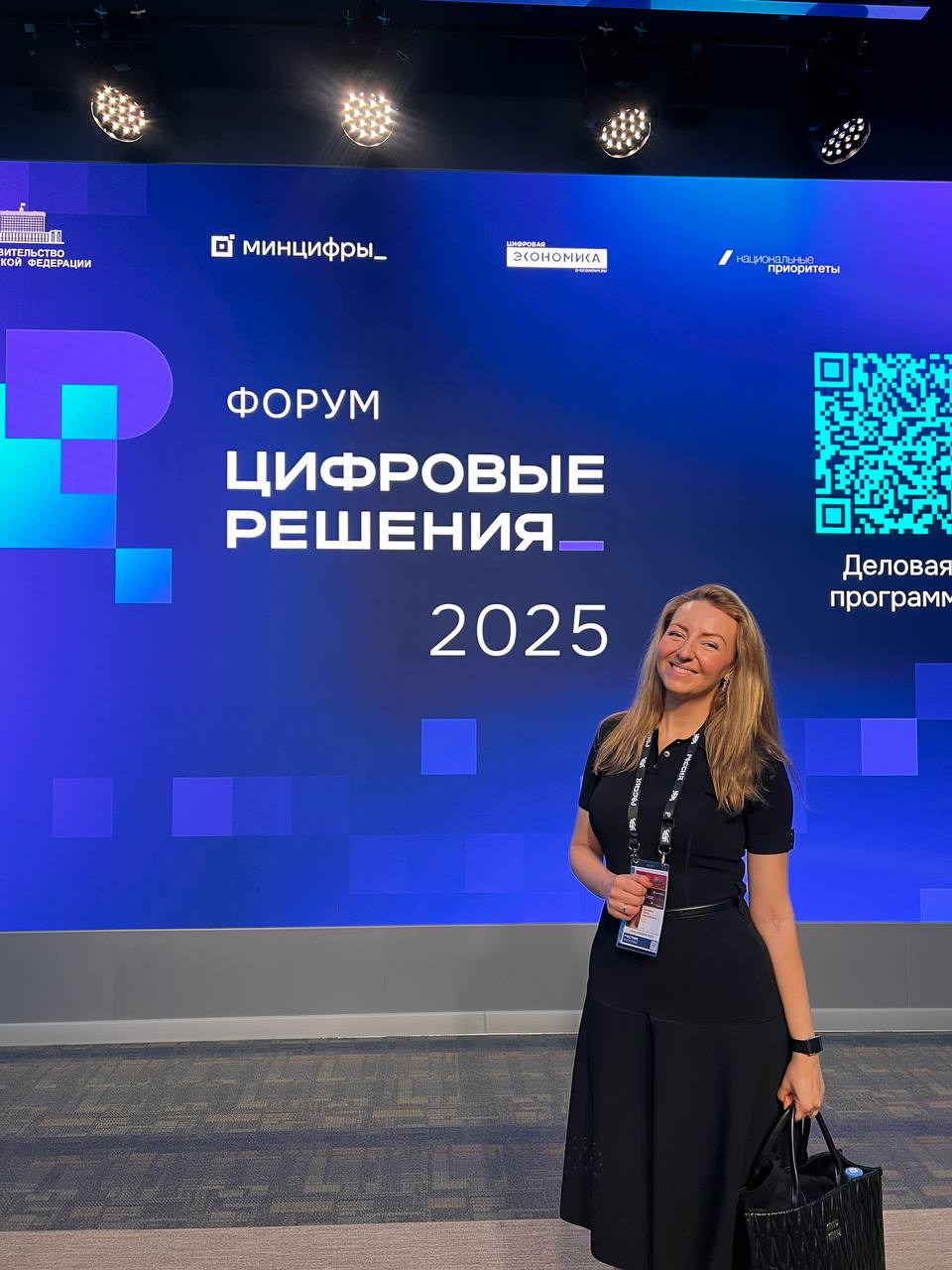

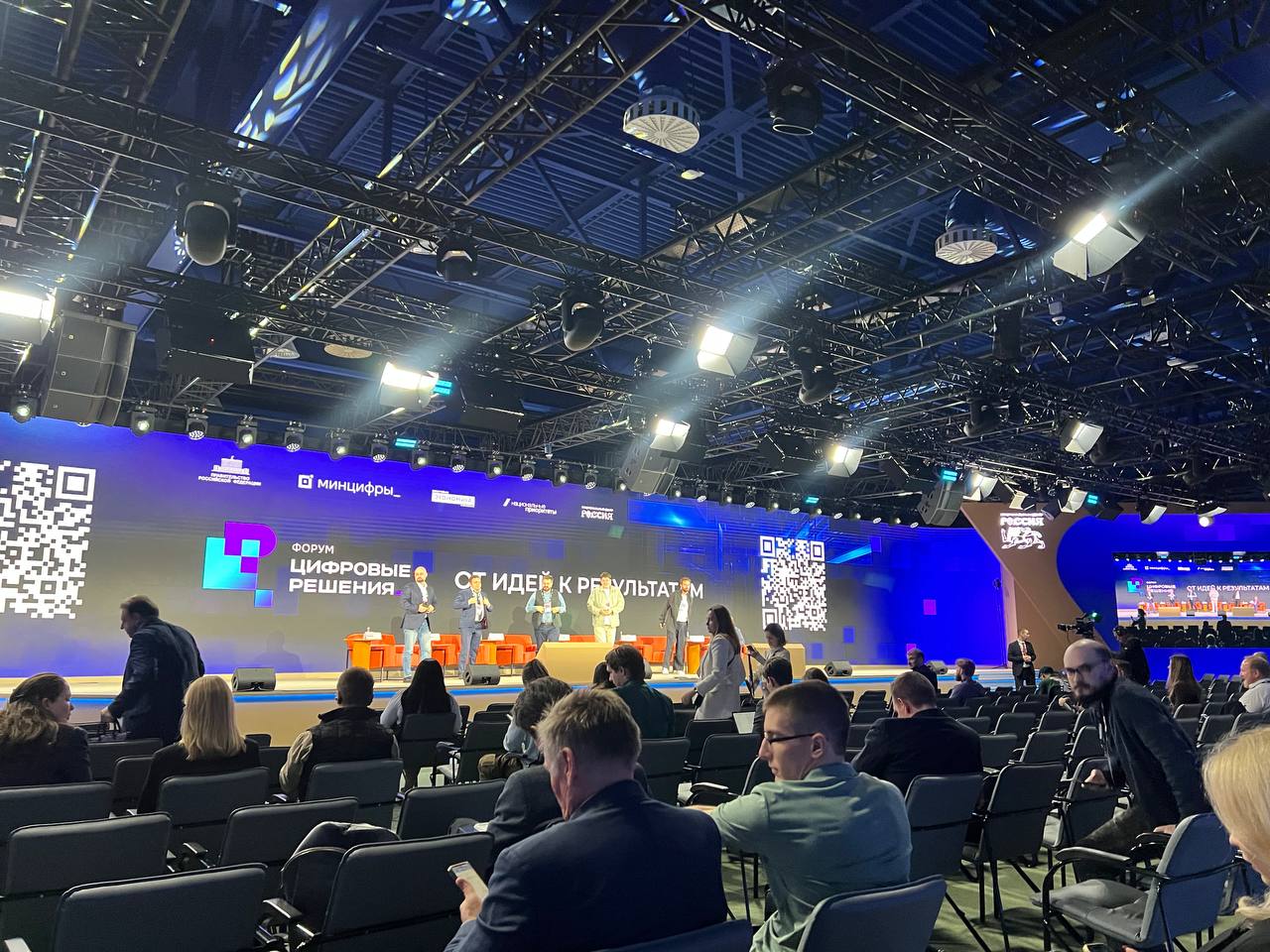
The Russian digital industry is entering a stage where the requirements for sustainability, security, and technological independence are becoming key for the entire ecosystem — from telecom operators to hardware developers and service platforms. These topics have become central to a large-scale Digital Solutions 2025 Forum: 4 days of work, over 15,000 participants, almost 700 experts on stage and a whole range of industry tracks covering key areas of digital policy and technological development of the country.
The platform became a place where government leaders, major companies and representatives of industry competence centers discussed complex issues that had previously remained on the periphery of the agenda: lack of equipment, maturity of infrastructure, dependence on global solutions, new regulatory models and the real state of domestic technologies. Among the participants are Prime Minister Mikhail Mishustin, Deputy Prime Minister Dmitry Grigorenko, and the head of the Ministry of Finance. Maksut Shadaev and the leaders of the technology market.
SILA Union participated in a professional dialogue on how architectural and process tools help build a managed digital environment, support the implementation of domestic solutions, and increase transparency in complex IT landscapes.
During the day, discussions unfolded in several tracks at once — from AI to radio electronics, from cybersecurity to telecom networks. Each of them showed that the transition to full-fledged technological sovereignty requires coordinated work by all industry participants.
Achievements, challenges and priorities
The plenary discussions were attended by Russian Prime Minister Mikhail Mishustin, Deputy Prime Minister Dmitry Grigorenko, Head of the Ministry of Finance Maksut Shadaev and heads of leading market experts.
The main plenary session of the Forum was held in a closed format and was devoted to a systematic assessment of the current landscape: where the Russian digital industry is moving forward, and where it is facing problems related to import dependence, staffing gaps and fragmentation of technological solutions.
The key focus is the need to coordinate strategies between the government, business and developers. During the discussion, the topic of the need for end—to-end management of architecture and processes was repeatedly raised - something that is becoming key today in the transition to domestic platforms. In this context, the approaches used by companies using SILA Union to analyze processes and coordinate IT initiatives were noted.
Forum tracks: key areas and discussions
The business program of the Forum included 8 relevant areas affecting the development of the economy, business and public administration.:
Communications and telecom. The section dedicated to domestic solutions for mobile networks and a new model of industry development showed how important sustainable supply chains and the transition to proprietary infrastructure are. The participants discussed how to restructure the market so that technological solutions are systemic.
Cybersecurity. The security tracks — "Information Security 2030" and privacy discussions — focused on how growing amounts of data and new threats are changing approaches to protection. One of the key conclusions is that security should be integrated into the architecture of systems from the very beginning, and not imposed later.
Russian hardware. The sessions on radio electronics and domestic solutions were devoted to the creation of a full cycle, from a component base to complete hardware and software solutions. They discussed how to ensure scaling, reduce dependence on foreign suppliers, and what steps are needed to increase their own capacities.
Artificial intelligence. In discussing the AI development strategy, participants talked about the barriers to implementation, the need for high-quality datasets, the role of regulation, and growth points for the coming years. A separate focus is the transition from pilots to the introduction of AI as part of standard production and management processes.
Software. The software development tracks discussed the growing demand for domestic mobile applications and the critical role of architecture in their scaling. It was about how modeling processes, the product lifecycle, and intersystem connections helps prevent chaotic growth of solutions. SILA Union was noted as a tool that allows you to build these models in a uniform and manageable manner using AI.
Platforms and services. Tracks about the new era of platforms and the future of mobile ecosystems touched on the evolution of the service model: from disparate systems to interconnected platforms, where user-friendly and secure scenarios are important. We also discussed the balance between platform flexibility and data security requirements.
Education and personnel. The educational sessions on the development of IT competencies addressed the problem of the shortage of specialists capable of working with complex architectural solutions and large systems. It was emphasized that the ability to work with process architecture becomes a basic competence, and platforms like SILA Union are used not only in projects, but also in educational programs of companies.
Government services. The public services unit discussed the need to coordinate departmental systems, increase transparency of processes and improve the quality of services for citizens. The architectural approach is especially important here: without a general picture of processes and data, it is impossible to ensure the stability of services.
The forum ended with discussions on human resource development, reducing the regulatory burden and creating conditions in which companies can create competitive solutions within the country. The participants noted that regulatory clarity is one of the key factors for sustainable growth.
Digital Solutions 2025 Award
The final chord was the award ceremony for projects that demonstrated technological maturity and readiness for real-world application. The award emphasized that the industry is moving forward, and the market is gradually forming its own quality standards.
Results
Digital Solutions 2025 Forum He showed that the Russian digital industry is in a phase where the ability to create system solutions is important: sustainable, secure and independent of external factors.
At the intersection of telecom networks, radio electronics, AI, cybersecurity and platform services, a new market architecture is being formed - one that will become the basis of technological development in the coming years. And SILA Union acts as a reliable companion here as a platform that helps model interdepartmental processes and keep them relevant.