

SILA Union in the State Duma: IT Architecture Management as the Basis of Technological Sovereignty
Today, IT architecture modeling is becoming a top priority on the government agenda. The State Duma hosted a roundtable discussion as part of a series of expert events on the role of an architectural approach in reducing costs, optimizing resources, and building a sustainable digital economy. SILA Union acted as a vendor and regular expert on strategic management, demonstrating how domestic software solutions are becoming a key element of technological sovereignty.
Russian platforms are already providing independence from foreign IT ecosystems and enhancing the transparency of digital asset management. The systematic development of national software forms the basis for long-term economic sustainability, reduces the risks of external pressure, and creates conditions for the country's advanced technological development.
The discussion focuses on the transition from fragmented IT initiatives to a managed, holistic enterprise and industry architecture. The participants are representatives of business,
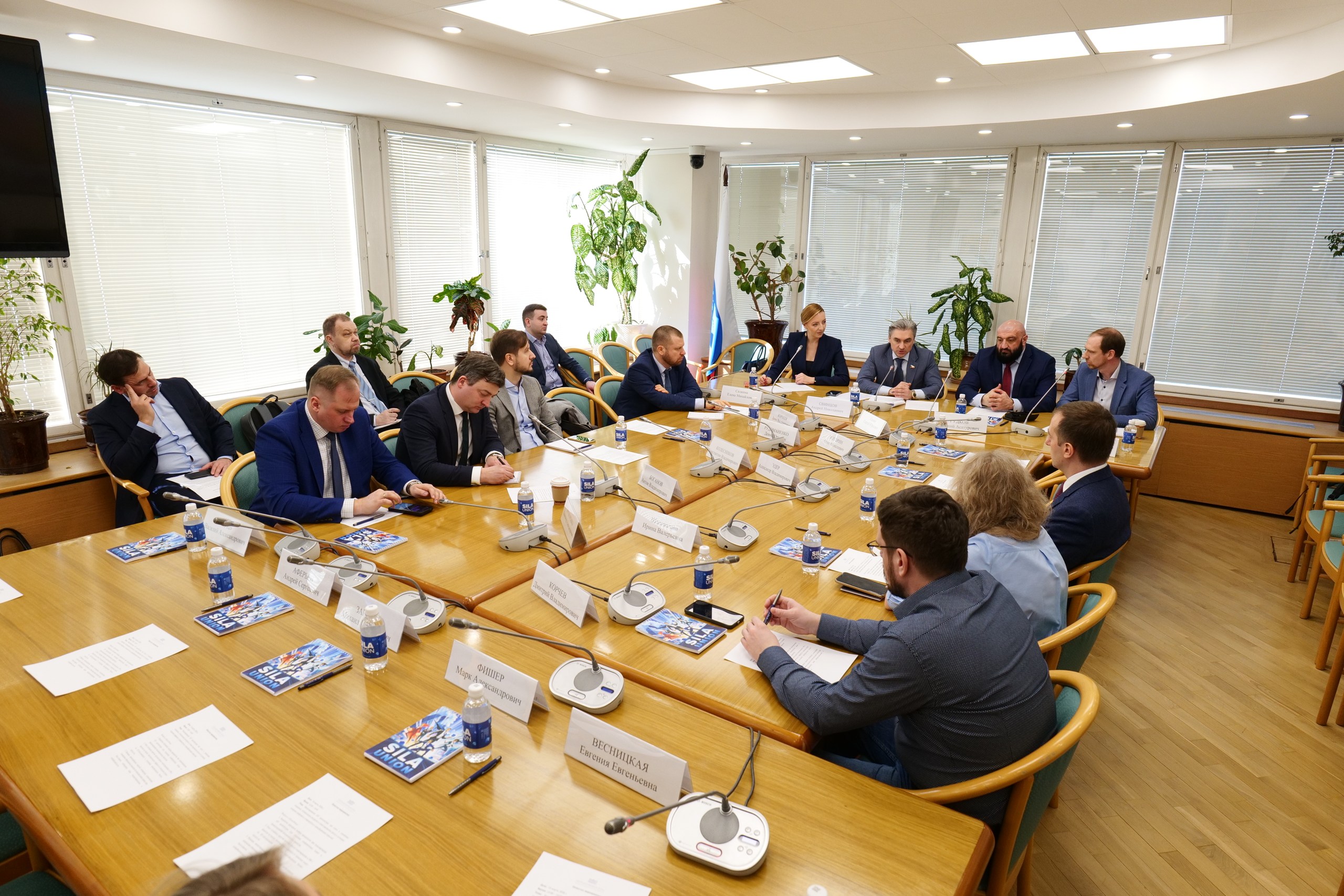
Resilient IT architecture instead of fragmentation
The theme of the event from a series of expert round tables was: "Modeling IT architecture as a key to reducing costs, optimizing resources, and stimulating growth in the context of digital sovereignty and industry transformation."
The key thesis of the discussion: Without system modeling, companies do not see the real picture of their processes and the IT landscape. Disparate systems, inconsistent data, and the lack of uniform standards lead to higher costs and lower manageability.
That is why tasks come to the fore.:
— formation of unified architectural models and standards;
— synchronization of data and systems within industries;
— transition to domestic platforms without losing sustainability;
— creation of a transparent digital picture of the enterprise.
From tools to the ecosystem
The discussion showed that the market has already passed the stage of targeted import substitution and is moving to the next level — building holistic ecosystems.
In this context, IT architecture modeling is considered as:
— a tool for identifying hidden costs;
— a basis for optimizing processes and resources;
— a mechanism for integrating solutions into a single environment;
— a basis for creating digital twins of enterprises.
Special attention was paid to the need for industry standards, unified data formats, and libraries of architectural patterns that will allow for the scaling of best practices.
SILA Union: IT Architecture - a Managed System
During the discussion, SILA Union experts emphasized the need to create a unified environment in which the enterprise architecture becomes a managed asset.
The SILA Union approach allows:
— to form a holistic model of the company: processes, IT, data, roles;
— ensure transparency and comparability of architectural solutions;
— manage changes and transformations based on data;
— reduce risks during the transition to domestic technologies.
In this case, the IT architecture ceases to be documentation - it becomes a working management tool.

Personnel, standards and practices
СA significant part of the discussion was devoted to the personnel issue. The participants noted the gap between education and real business tasks, as well as the need for:
— integrating industrial solutions into educational programs;
— developing practice-oriented training;
— creating a national system for certifying IT specialists.
There were also initiatives to create:
— unified knowledge platforms and methodological materials;
— digital testing grounds for solutions;
— industry-specific standards for modeling and managing architecture.
Bottom line: a managed IT architecture is a database
The roundtable confirmed that digital transformation can no longer be built without an architectural approach. Companies that do not manage their architecture lose efficiency, speed of change, and sustainability.
The next stage of industry development is:
— standardization;
— integration;
— manageability at the level of IT and corporate architectures.
This is where the domestic platform SILA Union plays a key role in shaping the foundation for digital sovereignty and long-term economic development.