
T-shaped analytics formula: the experience of SILA Union and the Institute of Artificial Intelligenc
The systems analysis market continues to evolve and adapt to new conditions. The era of single-skilled professionals who simply "gather requirements" or "model schemas" is a thing of the past. T-shaped specialists—digital transformation generalists who can speak the language of business, understand IT systems architecture, and manage change across the organization—are rising to the top of the list of in-demand skills.
SILA Union is actively shaping a new professional standard. Through integration with leading technical universities and early scouting programs, the company is building a pipeline for training analysts with precisely the combination of competencies in demand in the modern economy.
The Anatomy of a T-Shaped Specialist: The Value Formula
The T-shaped specialist concept describes a professional whose competencies visually resemble the letter "T." This isn't just a term from the HR dictionary, but a formula for business resilience in the face of uncertainty.
The vertical line (Depth) is the core of professionalism. For a systems analyst, this includes:
• Proficiency in modeling notations (BPMN 2.0, UML, ER diagrams);
• Understanding of information system architecture and integration principles;
• Requirements management skills (user stories, use cases, specifications);
• Expertise in business modeling tools (using the SILA Union platform as an example).
The horizontal line (Width) is what distinguishes an implementer from a solution architect:
• Understanding of business models and enterprise economics;
• Communication and facilitation skills (the ability to "translate" from business language to developer language);
• Systems thinking and the ability to see end-to-end processes;
• Basic knowledge in related fields: UX/UI, project management, data science.
The Ideal Analyst Formula:
Value = (Technical Expertise × Depth) + (Business Context × Understanding of Needs)
It's the lack of this "horizontal" component that often hinders the careers of talented techies. SILA Union emphasizes the harmonious development of both components.
Talent Lab: How Theory Turns into Practice
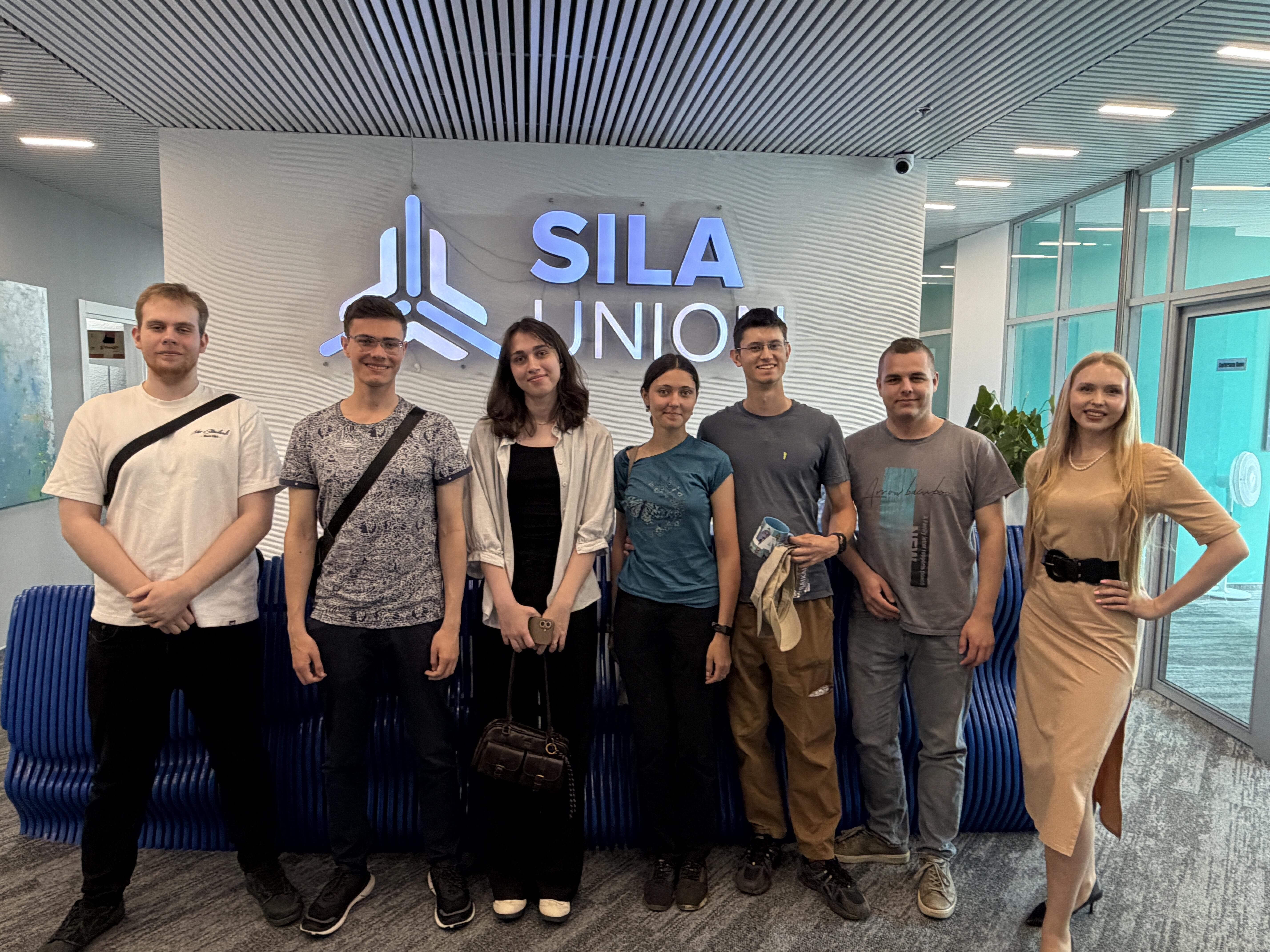
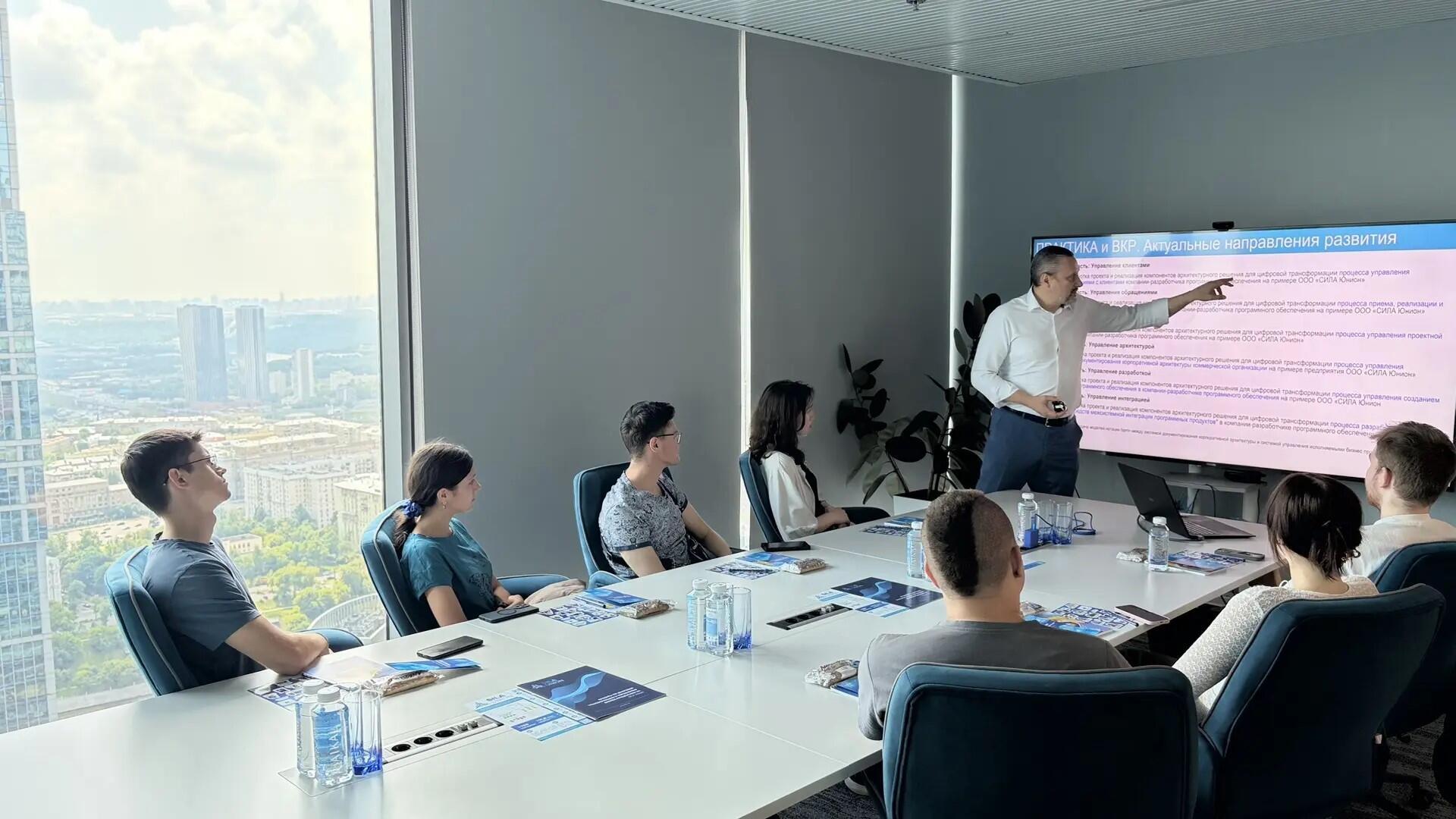
Testing for "T-shape" can't just happen in the classroom. It requires immersion in a real-world environment. A recent visit by students from RTU MIREA to the SILA Union office provided just such a practical training ground.
Second-year students from the Institute of Artificial Intelligence (major in Systems Analysis and Management) have a strong vertical component—a technical foundation. The task of SILA Union representatives was to help them begin to form horizontal connections.
The company's business architect led a session demonstrating how technical knowledge overlaps with business reality. The discussion focused not only on notational syntax but also on how architecture impacts a company's profitability, how to build dialogue with stakeholders, and how to manage change.
Interactive Quiz as a Test of Thinking Flexibility
The practical outcome of the meeting was a test of adaptability and the ability to learn quickly. Students were presented with cases requiring:
• Decomposing a complex process;
• Identifying bottlenecks without full information; • Propose a solution that balances technical constraints and business goals.
The quiz winners demonstrated exactly the type of thinking sought after by T-shaped professionals: the ability to quickly switch between details and the big picture.

Business Strategy: Why T-Shaped Specialists Are an Asset
For executives and business owners, switching to a team of T-shaped specialists is a matter of resilience in turbulent times.
Reduced transaction costs. A T-shaped analyst understands related fields, so they don't need to explain basic concepts ten times. They evaluate the impact of their decisions on the entire company ecosystem.
Speed of decision-making. A broad perspective allows such a specialist to offer comprehensive solutions without confining the problem to a single department.
Resilience to change. When technologies are updated every six months, it's important not only to have knowledge of a specific tool but also to be able to quickly adapt to new conditions. This flexibility is precisely what SILA Union seeks and develops in its students.
Development Roadmap: Reaping Practical Benefits
How can these insights be transformed into a real competitive advantage? We've developed practical guidelines to help maximize the value of this experience—both for professionals charting their career paths and for companies building strong teams.
For students and aspiring analysts: don't focus solely on hard technical skills. Explore business domains, develop soft skills (communication, facilitation), and learn to ask the right questions. The early scouting conducted by SILA Union is aimed specifically at finding people with a broad perspective who can be trained to work with specific tools. Requirements change, but systems thinking remains.
For current analysts: conduct an audit of your competencies. If your "horizontal" bar is short, you risk remaining a mid-level performer. Study related fields: product management, data analytics, enterprise architecture. SILA Union's initiatives clearly demonstrate that the modern analyst is a strategic partner for business, not just a drafter of technical specifications.
Resume
The collaboration between RTU MIREA and SILA Union is a deliberate strategy and new opportunities for professional development among young specialists. Today, we are shaping the future of the profession with leading universities, participating in the training of experts that businesses will need tomorrow. This partnership bridges the gap between academic theory and real-world business challenges, providing students with a clear professional identity and the market with guaranteed qualified personnel.
The passive strategy of waiting for the right specialists to appear on the market no longer works. Joint initiatives between universities, the IT sector, and businesses instill a culture of systems thinking right from the university stage. In the new economic reality, the winners are not those companies that simply have more employees, but those whose teams have a high competency density. The T-shaped approach is the formula for this density.