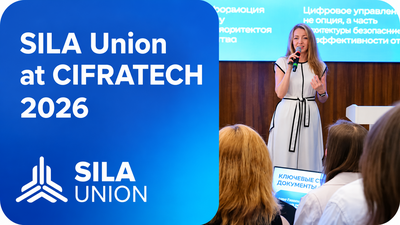

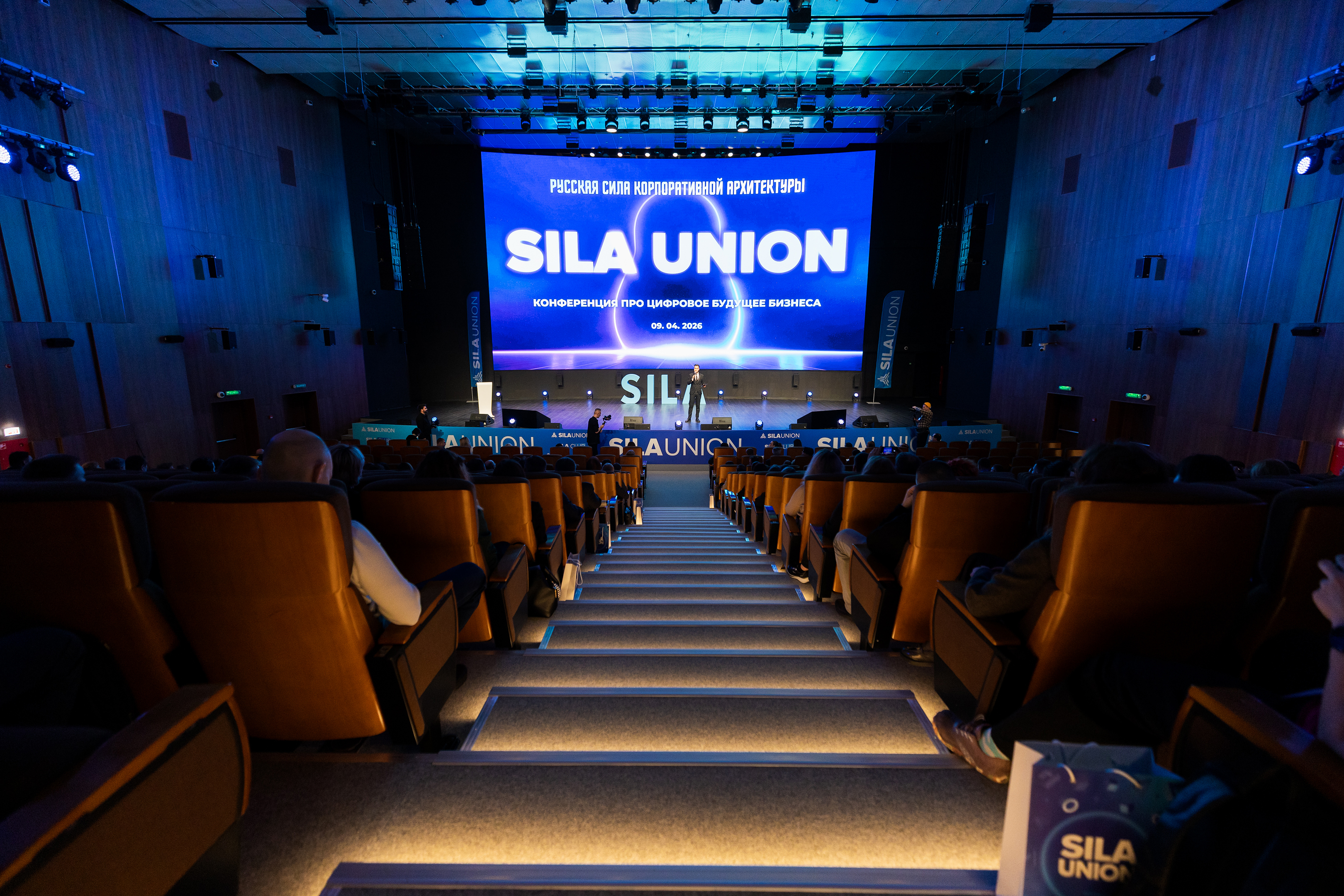
The answers to the key challenges of the time were presented on April 9 in Moscow, where the SILA Union "Russian Power of Corporate Architecture" IT conference brought together those who are shaping the future of our country. The conference set a new standard for the entire industry and brought together key economic players, including the Ministry of Economic Development of the Russian Federation, the Government of Moscow, the State Duma of the Russian Federation, Gazprom, Rosatom, the Accounts Chamber of the Russian Federation, and leading representatives of the industrial and financial sectors. The event served as a powerful catalyst for market transformation, where ideas gained momentum and became tangible steps towards shaping the future.
More than 1,000 participants, 35+ speakers, 8 hours of dense content, dozens of implemented cases, and one common focus: systemic management in an era of change. The key to implementing systemically significant and economically important projects is the SILA Union platform, which has already transformed companies from within, accelerating processes, making management transparent, and making businesses profitable and efficient.
The stage was filled with those who make daily decisions at the industry, city, and country levels, from managing the infrastructure of megacities to transforming major corporate systems. The presented cases covered a wide range of areas, from oil and gas and nuclear energy to financial infrastructure, development, and public administration.
The key themes that ran through all the presentations and that are currently defining the sustainability and development of organizations are: how to build corporate architecture, how to manage business processes, and how to implement artificial intelligence
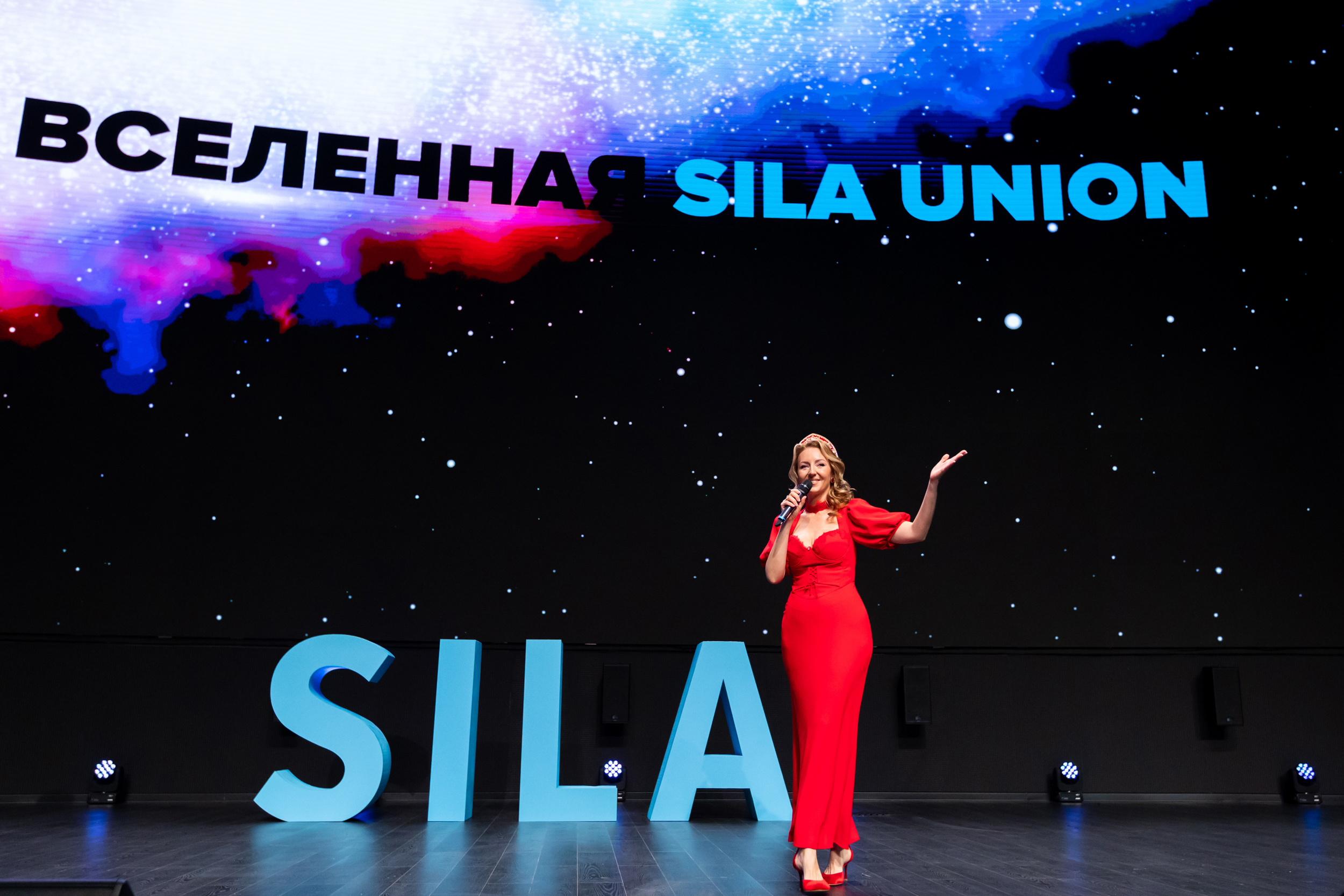
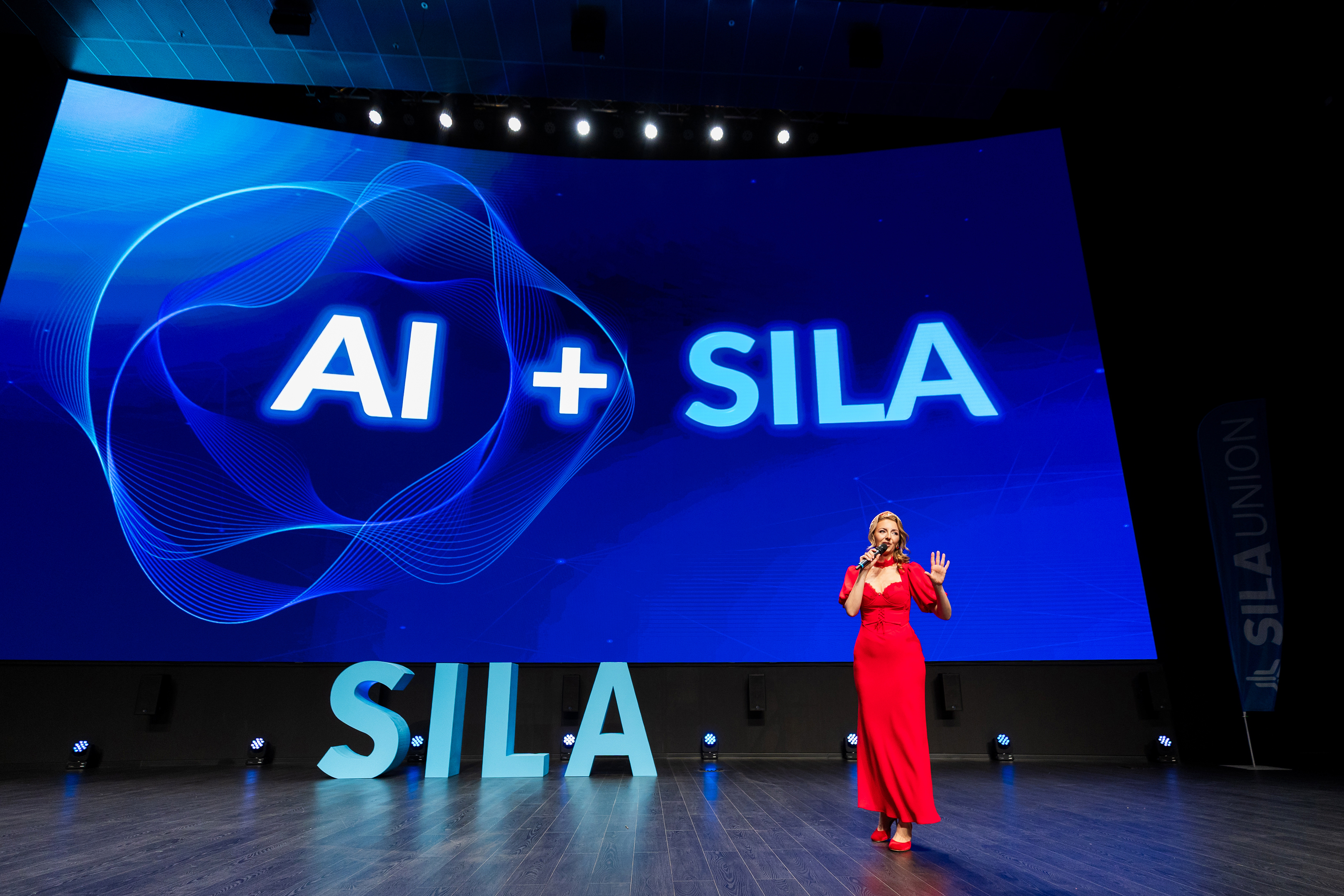
SILA Union Universe: New Opportunities and the Power of Artificial Intelligence
The founders of SILA Union, Elena Silkina and Alexander Silkin, set the strategic scale and dynamics of the entire conference, outlining a vector that is significant for the development of the country as a whole.
The focus is on new technological opportunities, the integration of artificial intelligence, and the transition from fragmented solutions to a unified, systemic architecture.
Today, SILA Union is a platform that combines technologies, approaches, and management practices into a holistic ecosystem. Architecture is no longer an auxiliary function, but a key tool for managing changes at the business and government systems level. Artificial intelligence, in turn, becomes an integral part of the operating model, enhancing the quality of decisions and opening up new horizons for efficiency.
as noted by Elena Silkina:
"We are not just talking about processes, architecture or IT. We are talking about the scale of thinking that companies are working with today. Our customers are the largest companies in the country. And their projects are always about complexity, about the system, about the need to see the whole. We are gradually moving away from fragmented solutions to a more holistic, systematic view of companies. And this directly affects how quickly and efficiently a business can change."
This vector — the unity of technologies, systemic thinking, and the use of AI potential for large-scale transformations — became the leitmotif of the entire conference and set the direction for further progress.
Education as a Foundation: Launching SILA Academy
A separate event was the presentation of SILA Academy, a new educational platform of SILA Union. It is a full-fledged learning ecosystem: advanced training programs, certification, a course marketplace, mentoring, and partnerships with universities.
In fact, it is about creating a new educational environment that trains practical specialists capable of managing corporate architecture and digital transformation based on modern methodologies and tools.
SILA Academy's collaboration with the education sector provides students with access to both practical and fundamental knowledge. The portfolio already includes 85 university partners, over 10,000 students in the SILA Union system, more than 25 implementation regions, and 200+ teachers.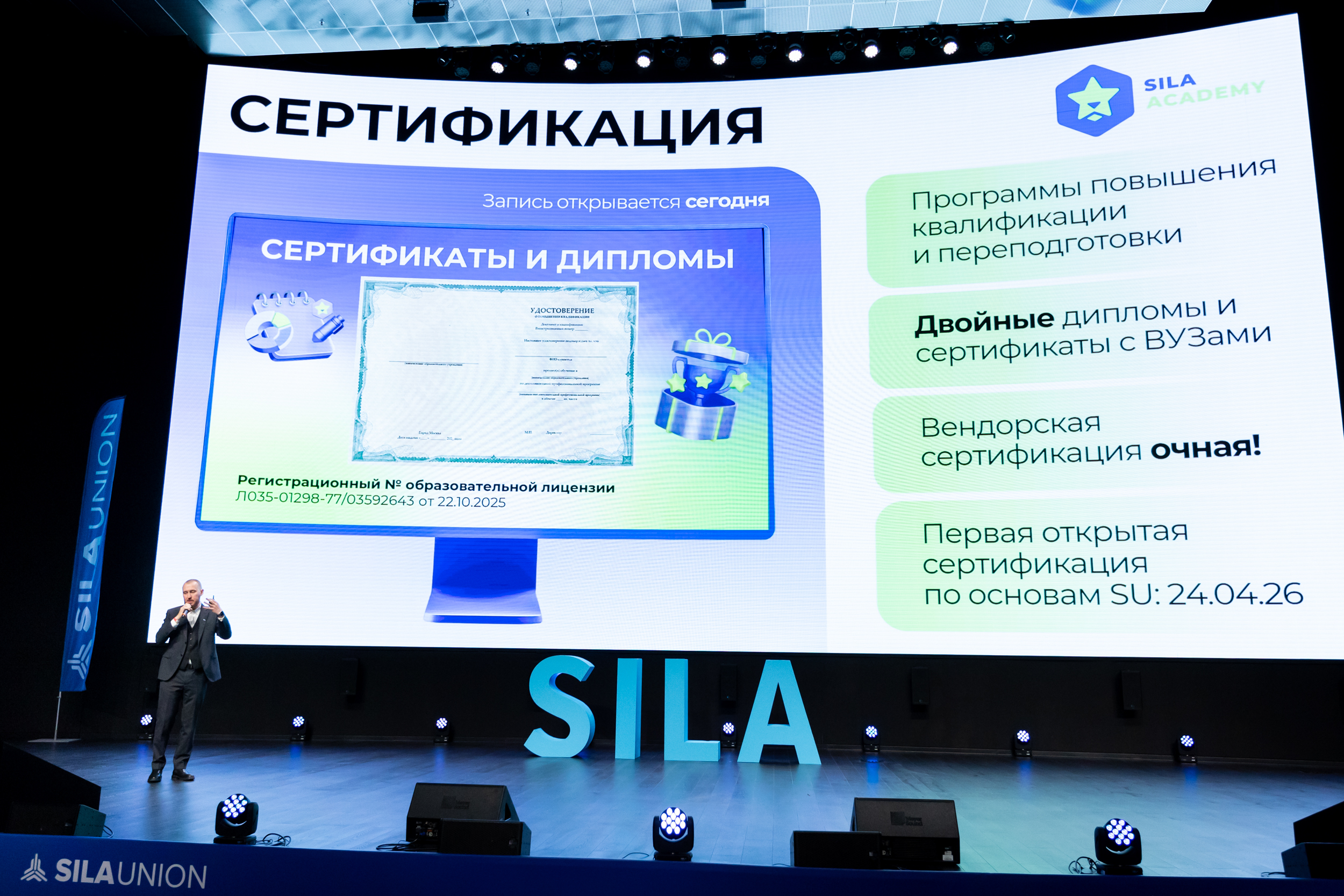
Who is shaping the new managerial reality?
The program brought together representatives of the country's key organizations, and each case demonstrated how complex management tasks are solved in practice. The stage was filled with industry leaders, executives, industry experts, future architects, and those who work at a national scale.
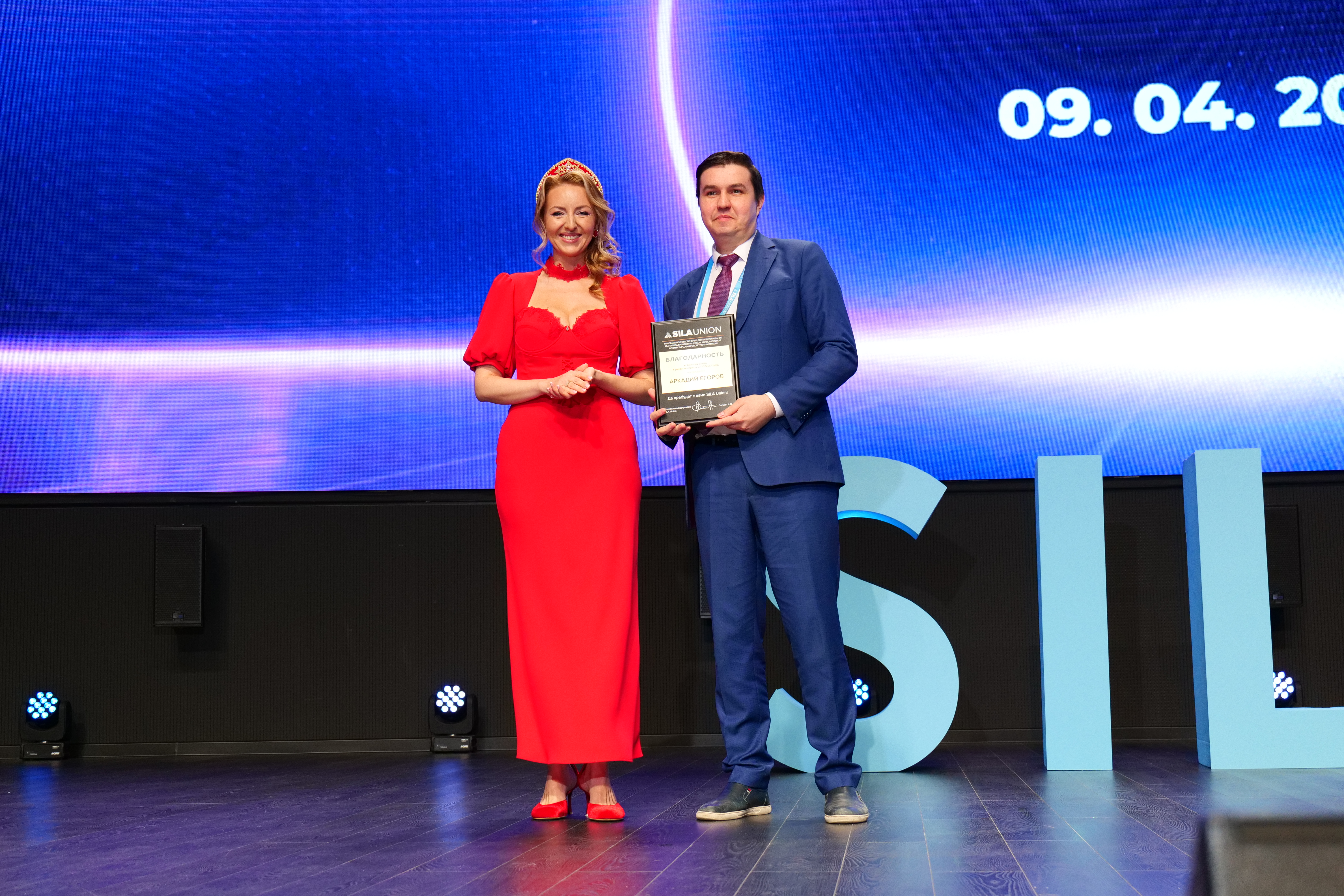
Arkady Egorov, Deputy Director of the Quality Assurance Department at the Ministry of Economic Development of the Russian Federation, presented the experience of creating a unified business architecture modeling system based on SILA Union, which covers the federal and regional levels, including the Federal Center for Administrative Services. This is an example of how unified management standards are being established at the national level, accelerating the delivery of public services. Arkady Egorov noted:
"The key to management is a unified process model. High-quality business modeling is the foundation that allows you to adapt flexibly to changes and make interactions with citizens more effective."
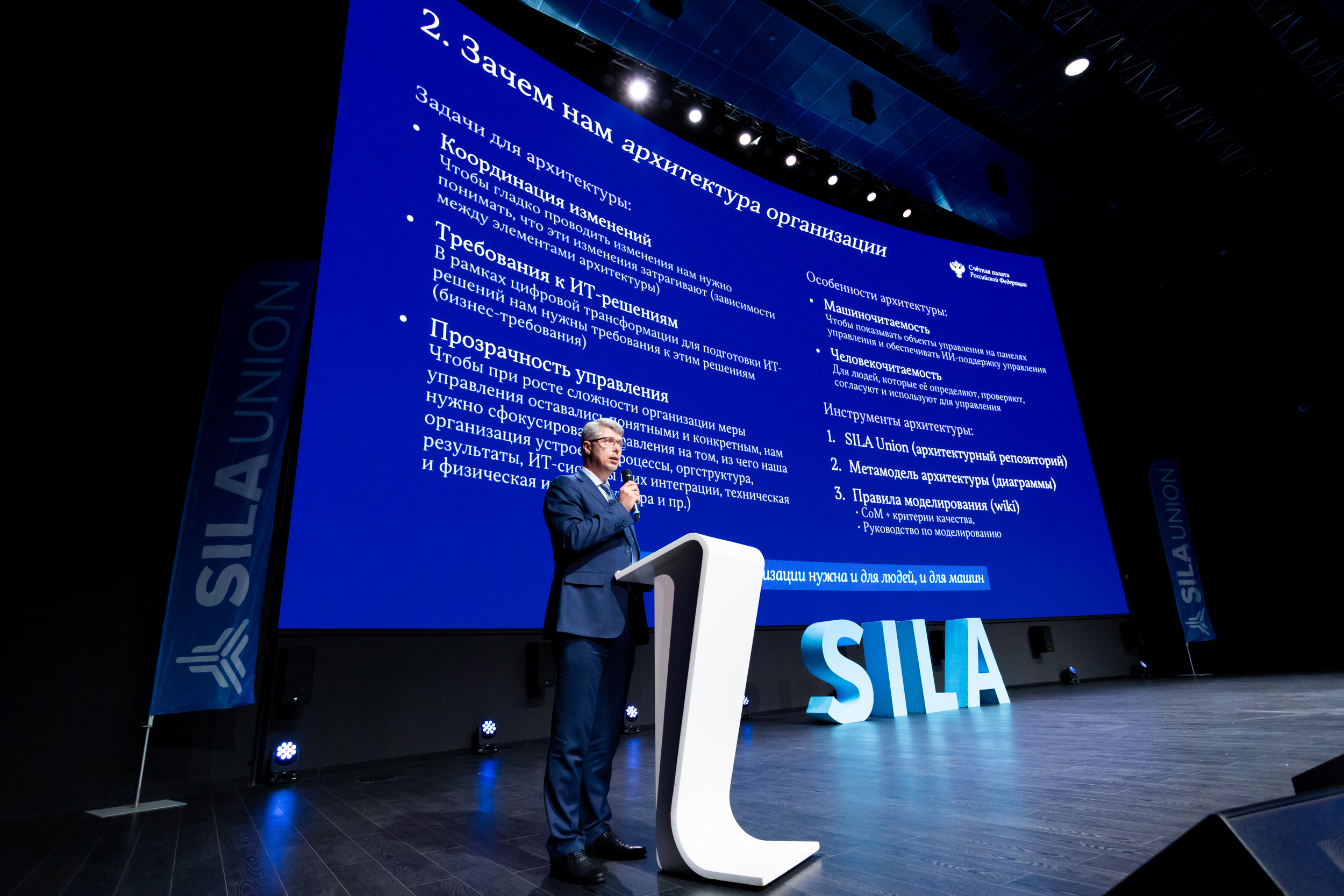
Vladimir Andreev, Deputy Head of the Department of Strategic Development at the Accounts Chamber of the Russian Federation, demonstrated a practical approach to building an organization's architecture through the SILA Union model system, from tasks to functions and relationships, to make more accurate management decisions.
"The result of working with SILA Union is a sharp increase in the quality and consistency of models, a decrease in the cost of manual control and training, and most importantly, an increase in team engagement, because the architecture is starting to work," said Vladimir Andreev.
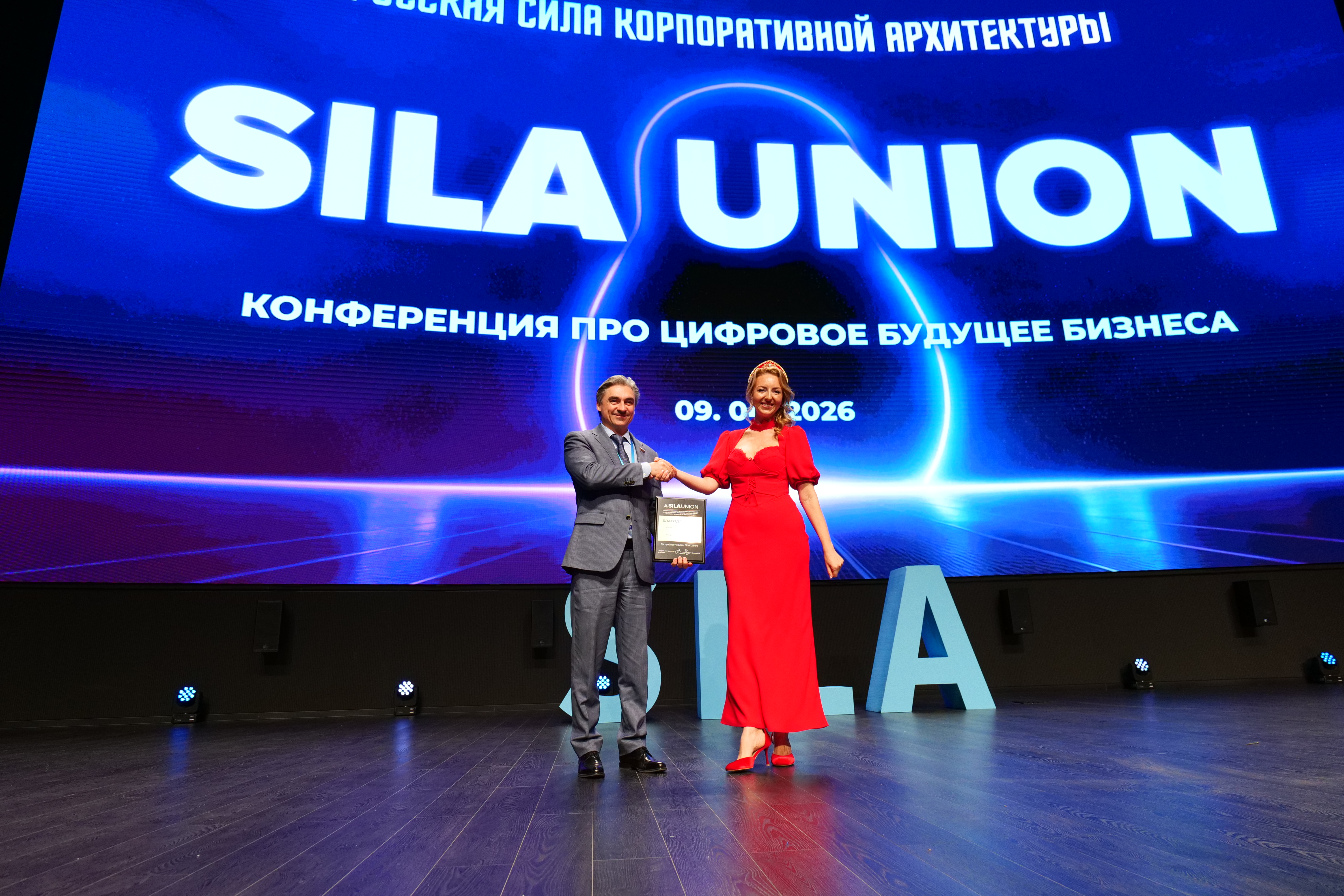
Andrey Svintsov, Deputy Chairman of the State Duma Committee on Information Policy, Information Technologies, and Communications, presented the positive experience of cooperation with SILA Union in the field of digital transformation and explained how cooperation is being built, processes are being simplified, and work is becoming more transparent.
"The success of the implementation of the President's Decree on import substitution can only be achieved through the synergy of the state, business, and vendors. An example of such a partnership is our work with SILA Union as a guest expert at meetings on the development of management standards," said Andrey Svintsov.
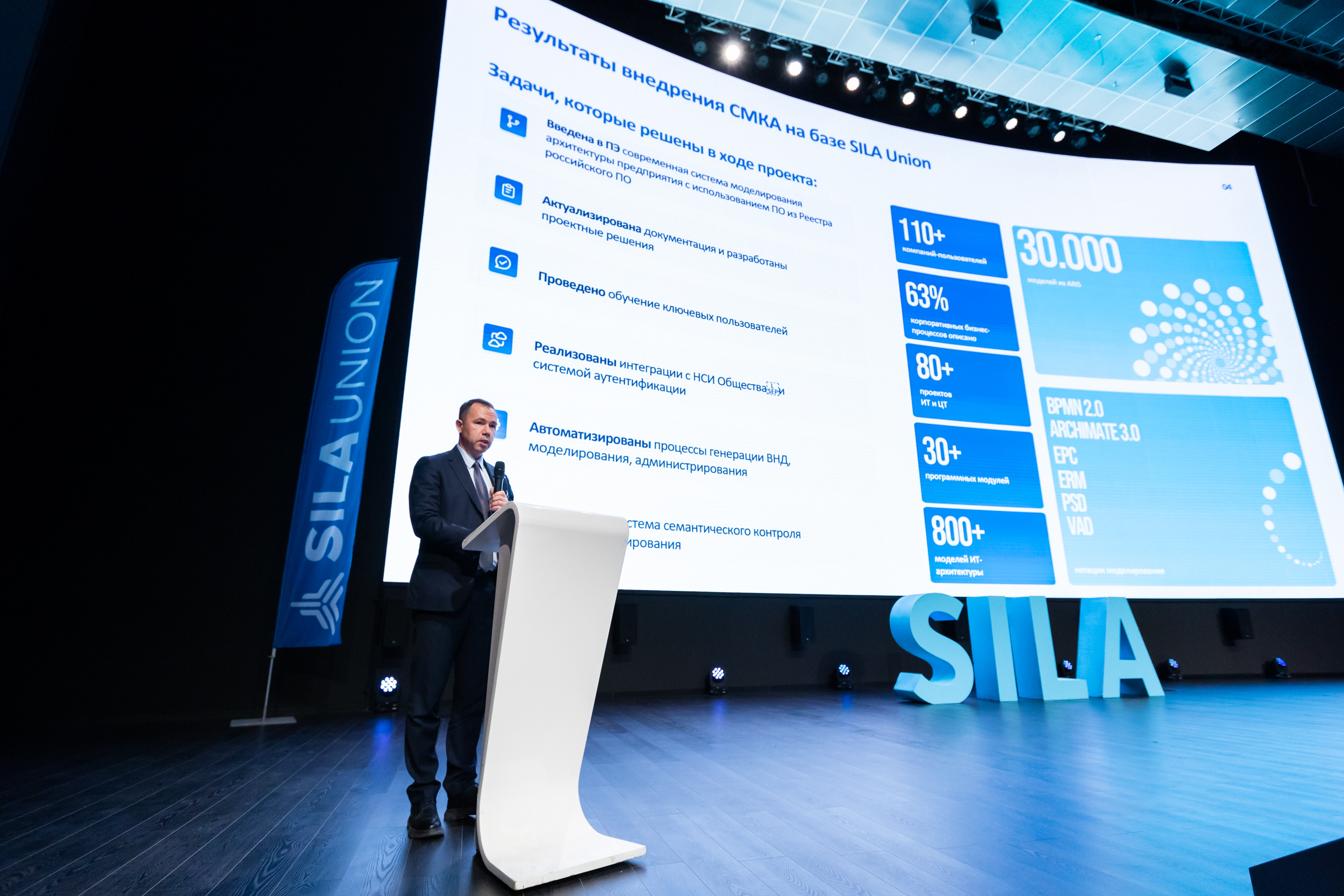
Alexander Grigoriev, Head of Management at Gazprom PJSC, explained how SILA Union's architecture and end-to-end processes can be used to manage changes in one of the largest and most complex corporate systems with numerous divisions and areas of activity. He emphasized:
"Today, we have already solved key tasks on the basis of SILA Union: we have updated our documentation, automated our processes, and implemented semantic quality control. This is the foundation for our digital transformation."
Companies from the Rosatom ecosystem: Evgeniya Antonova, Head of the Integrated Management System Management Department at RASU JSC, Petr Ponomarev, Deputy General Director for Business Applications, and Elena Gorbacheva, Head of the IT Architecture and Requirements Department at KONSIST-OS JSC, demonstrated how processes are built in an environment with maximum requirements for safety and reliability, where processes become a critical element of sustainability.
Elena Daubvalder, Deputy Director of the Digital Technologies Department at Cherkizovo Group, explained how to combine disparate processes, legal entities, and teams into a single managed system that allows for faster decision-making and cost reduction.
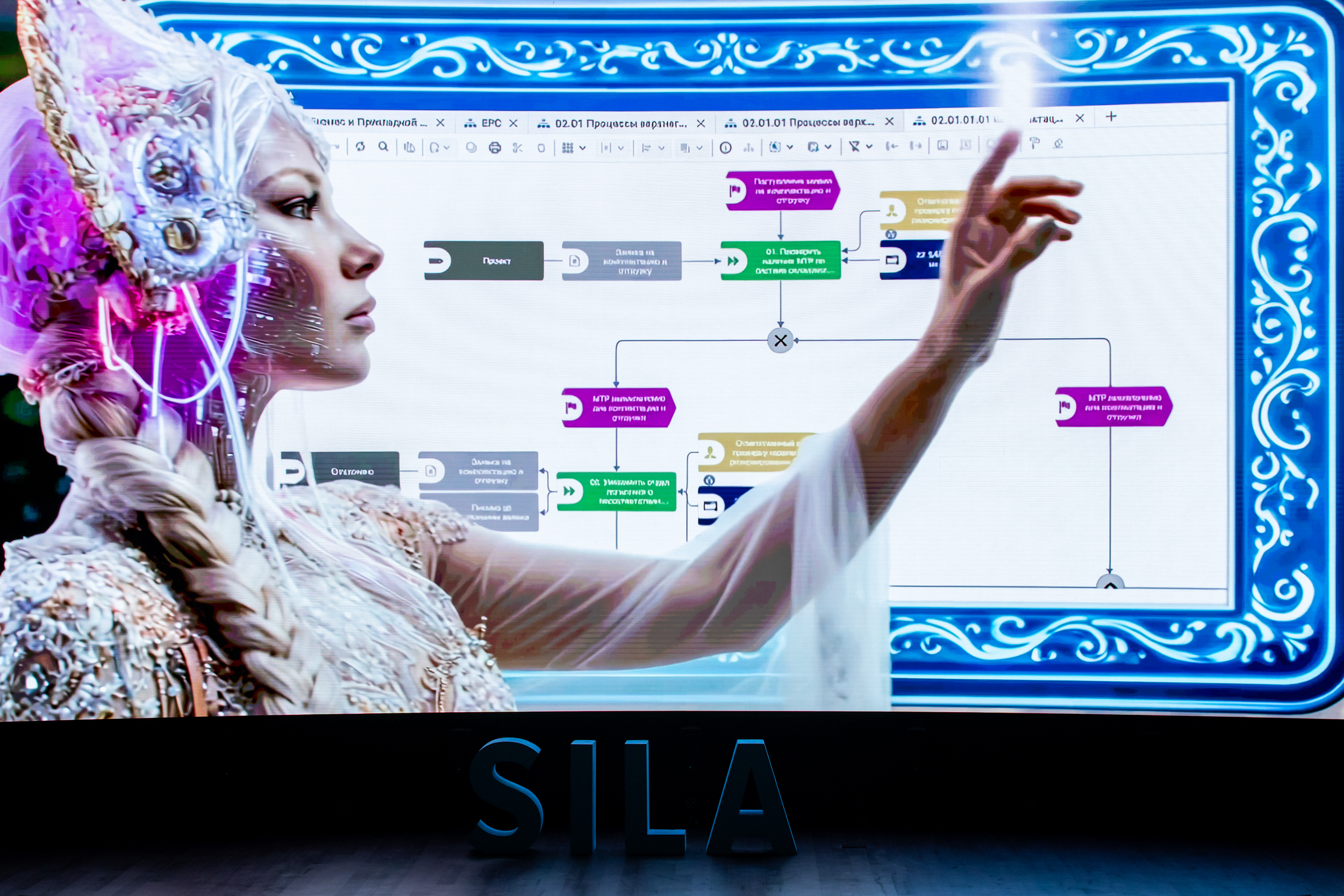
The consulting block was presented by DRT's practice: Sergey Goncharov, Head of the Operational Consulting Practice at DRT Consulting, shared insights on where businesses often lose the benefits of BPM implementation and what approaches can truly help achieve manageability and effective results.
Anna Brovkova, Head of the Methodology Department at the Project Management Office of CONCERN TITAN-2, demonstrated how to create a digital management loop based on SILA Union's digital twins, where methodology, processes, and data are integrated into a unified system, enabling the management of a company as a cohesive entity.
Svetlana Drobyshevskaya, Head of the Process Development Department at the National Payment Card System, explained the role of processes in the financial infrastructure and how they provide the foundation for a company's successful development.
Anatoly Belaychuk, President of the ABPMP Russian Chapter, and Ilya Tomoradze, Associate Professor at the Russian Presidential Academy of National Economy and Public Administration, explained how to apply a process-based approach in practice.
"The power is in the skills. I actively promote learning services and believe that people should learn. The power is in the skills and competencies, and I hope that all the conference participants have acquired them."
All these cases have one thing in common: implementation based on the advanced SILA Union platform as an environment where architecture becomes a managed system.
High concentration of practice
Each presentation at the conference was about real experience: implemented solutions, achieved results and specific management effects. Participants got the opportunity to see how corporate architecture works in action – in complex, distributed and critical systems.
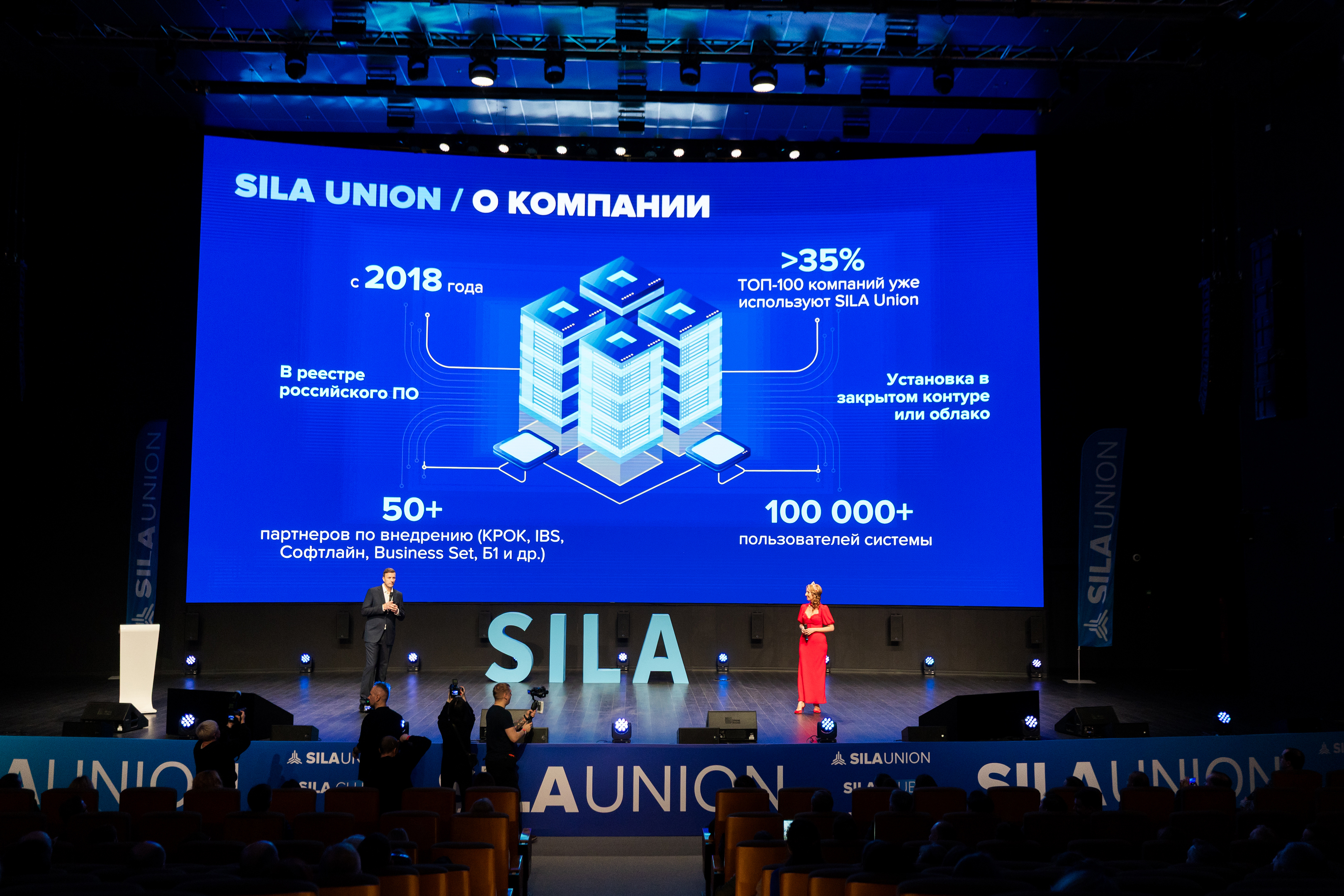
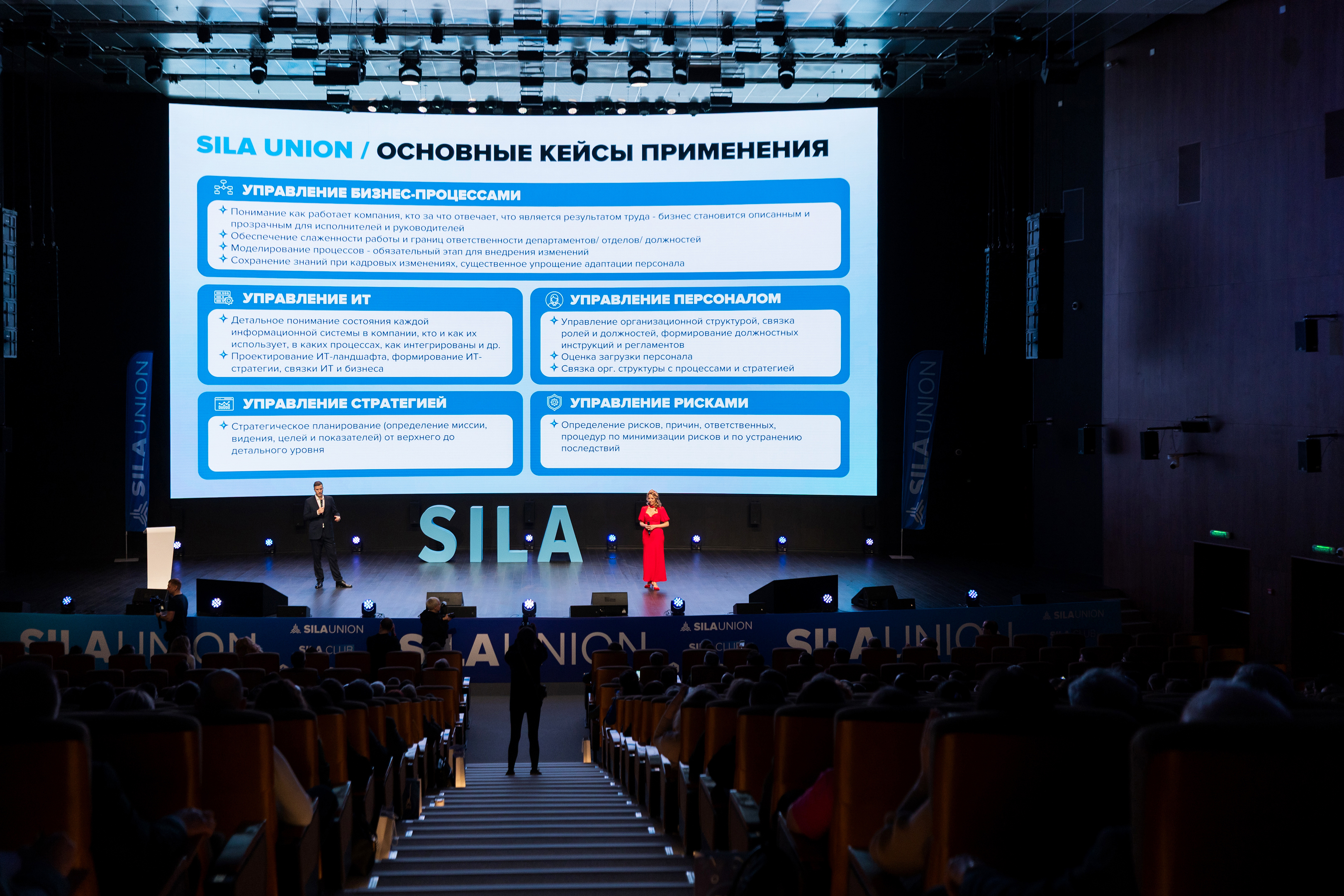
A special emphasis was placed on projects implemented based on SILA Union. The speakers demonstrated how a unified modeling environment allows for the synchronization of processes, teams, and the IT landscape, resulting in a transparent and manageable business architecture. SILA Union is a comprehensive decision-making environment that scales from the level of a single function to the entire organization or even an entire industry. Currently, over 35% of the top 100 companies use SILA Union, with over 50 implementation partners and 100,000+ users.
Anna Brovkova, JSC CONCERN TITAN-2:
"SILA Union looks like a strong, modern product that offers advanced functionality for its customers, and I think it will meet many of our needs."
What were they talking about?
There was a common logic behind the different cases and industries: companies are moving from fragmented changes to systemic management.
The presentations and discussions went far beyond the classic “digitalization” and were filled with answers and solutions to the acute, pressing challenges of the market. It was about how to:
— manage complexity and scale,
— build end-to-end processes,
— to reduce costs without losing control,
— to accelerate changes through an architectural approach,
— and to create sustainable development models in the face of constant external challenges.
The conference showed that today, it's not about having more tools, but about having a systematic management logic.
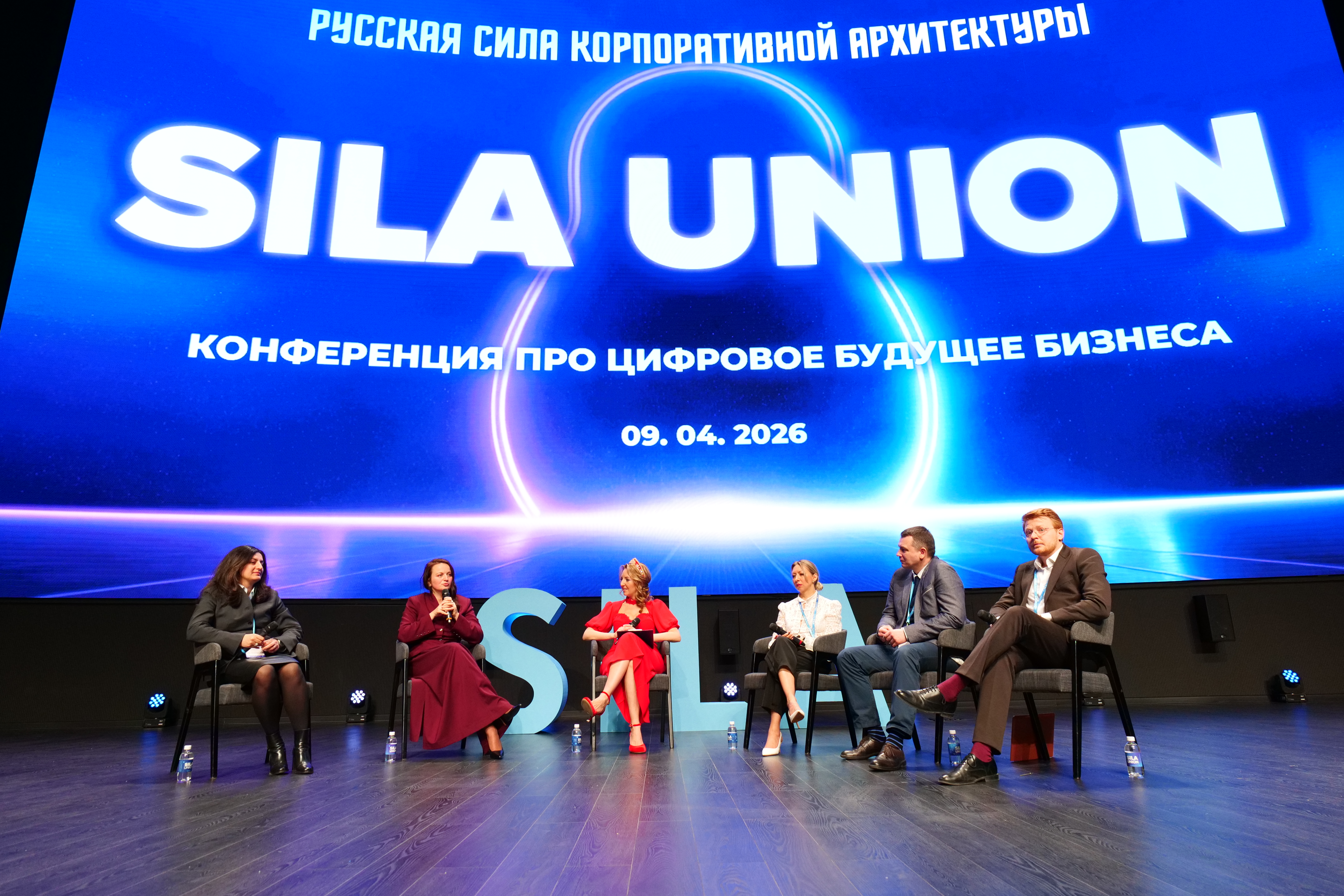
Round Table: Corporate Architecture and AI
A separate point of attraction was the round table "Corporate Architecture and Process Approach in the Era of AI". Representatives of major companies and organizations took part in the discussion:
— Elena Silkina, founder of SILA Union,
— Sofia Savinova, head of the business analysis and IT system implementation center at Gazprom CPS LLC,
— Vyacheslav Lapenkov, head of the project management department at the Moscow Department of Urban Development Policy,
— Ekaterina Izmailkova, an expert in the field of process management at Russian Railways,
— Anton Antipin, CEO of Business Set, partner of SILA Union,
— Evgeniya Vesnitskaya, Chief Architect of RITM.
The experts discussed one of the most pressing issues today — how to implement artificial intelligence in a way that truly delivers business results.
The focus was on:
— which processes are suitable for AI, and where the role of a human is critical,
— why do many AI projects fail to achieve results, and where is the effect lost?
— who should be the owner of the initiative?
Special Section: education and the future of the industry
A separate track was the "Innovations in Education" section, where the training of specialists for the new digital economy was discussed.
The participants saw how a modern educational model is being formed, with a focus on practice, process thinking, and working with corporate architecture. Universities and professional communities presented real-life cases of implementing IT practices in the educational process and shared their approaches to training specialists who are ready to work with real business tasks from the very first days.
This track has become an important link between education and industry, showing how the human resources base is being formed for future transformations.
Digital Power Contest: Best Practices in Action
A significant event of the conference was the awarding of the winners of the Digital POWER contest. Dozens of projects were submitted to the competition, and the best of the best became winners.
The conference featured projects implemented on the basis of SILA Union, which have already shown a measurable effect in companies in various industries. These are solutions that work, scale, and deliver business results.
The winners of the competition were:
— In the nomination "SILA Union for building a corporate architecture modeling system" — Gazprom PJSC and Gazprom Inform LLC.
— In the nomination "SILA Union for optimizing the activities of a State Body" — the Accounts Chamber of the Russian Federation.
— Cherkizovo Group is in the nomination "SILA Union for ERP system transformation".
— In the nomination "SILA Union for lifecycle management of business process models" — Russian Helicopters JSC.
— In the nomination "SILA Union for building an IT architecture and requirements management system" — JSC "CONSIST-OS".
— In the nomination "SILA Union for the design of business architecture:" — CONCERN TITAN-2 JSC.
— In the nomination "SILA Union for the organization of process management of a service company" — PC Volkhovets LLC.
They demonstrated how a process approach, architecture, and digital tools are becoming the foundation for improving the efficiency, transparency, and manageability of organizations. Congratulations to the winners!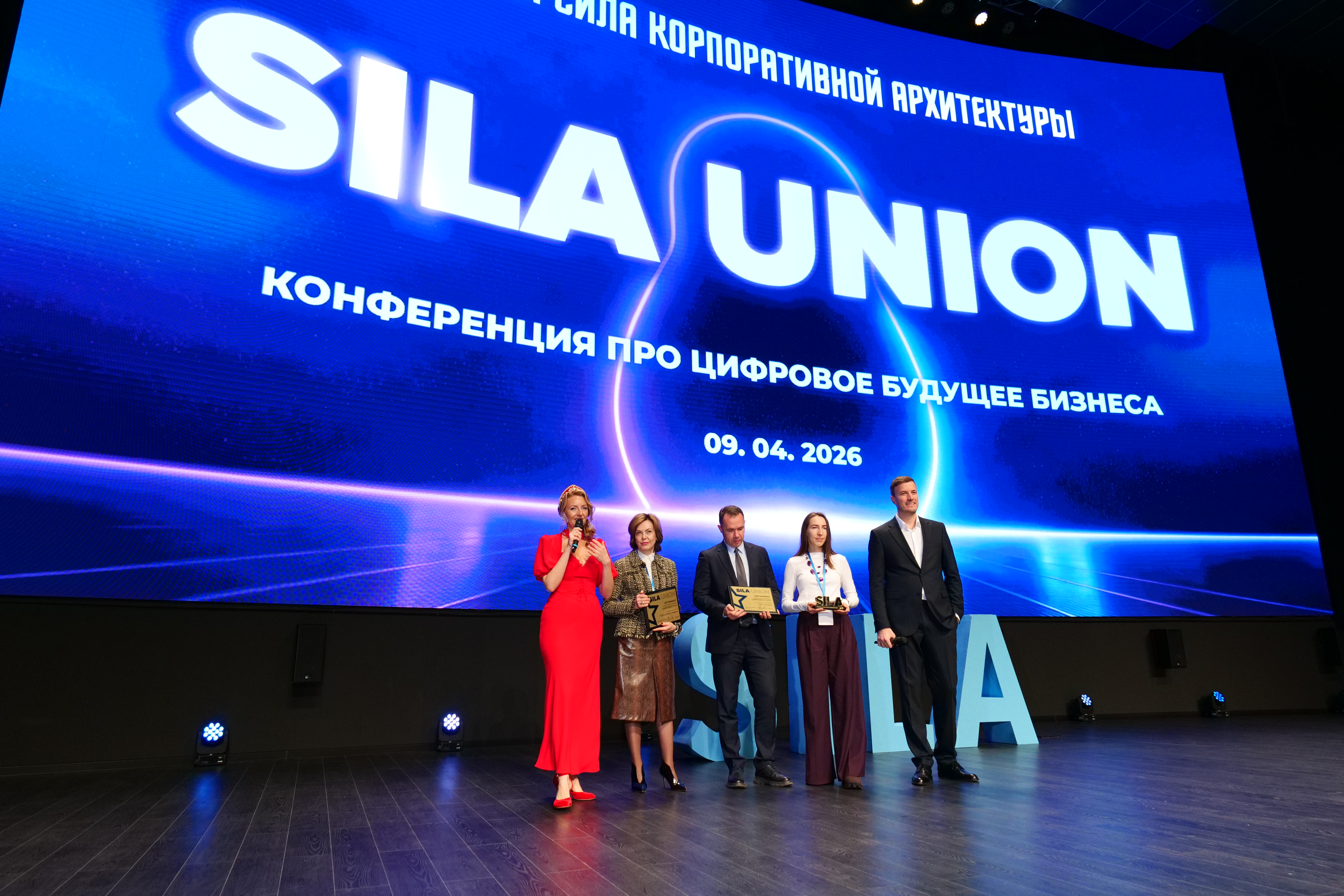
An atmosphere that unites
A lively and open atmosphere is what each participant of the conference noted. One of the key and significant features of conferences is the opportunity for fruitful and intense networking. The participants actively communicated, discussed cases, shared their experiences and found new points of interaction.
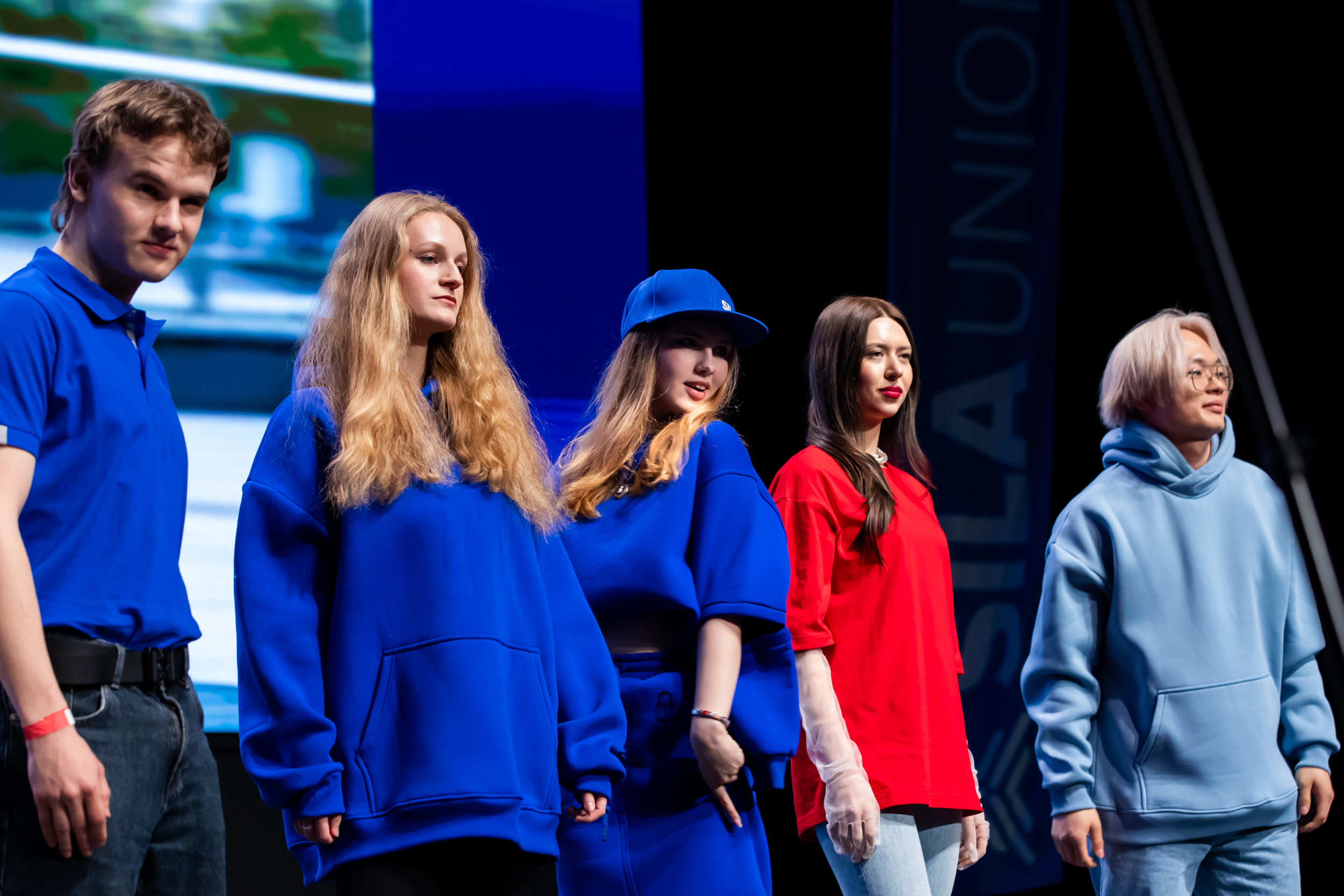
The unity of the ecosystem was evident in every detail of the conference. The presentation of the new SILA Union merch "Russian POWER" — stylish, thoughtful and reflecting the brand's philosophy — was one of the most emotional moments of the event. A fashionable performance and a real fashion show of branded clothing were shown to specially written music for the conference, which caused a lively response and delight among the participants. It has become part of the general culture of the community, where not only technology is important, but also identity.
Andrey Koptelov, founder of the School of Business Analysis:
"I really like SILA Union — they are actively developing in the market. And, honestly, I was pleasantly surprised when I saw such a beautiful merch. This is a sign of serious business."
Interactive formats, creative activities, immersion in Russian culture and identity, as well as a prize draw added energy to the event and made it truly memorable. This is a space where not only ideas are formed, but also professional connections.
Results: further — more
The conference "The Russian Power of Corporate Architecture" has clearly shown that architecture is a key management tool. Today, those who think systematically win.
It is through architecture that companies build system changes, achieve sustainability, and form the basis for growth. And the SILA Union platform is becoming the technological foundation that allows us to implement these tasks in practice.
The conference established a new industry standard: management through architecture, data, and processes is becoming the norm for major companies and government agencies. The presented cases and solutions set a clear development vector — towards consistency, transparency and manageability at all levels. The Russian POWER of Corporate Architecture is a key professional platform shaping the future of management and digital transformation.