

How to implement AI with results: practical approaches of experts at the SILA Union conference
At the Russian POWER of Corporate Architecture conference, experts from a panel discussion on the introduction of AI into the corporate environment outlined what determines the successful implementation of artificial intelligence in companies.
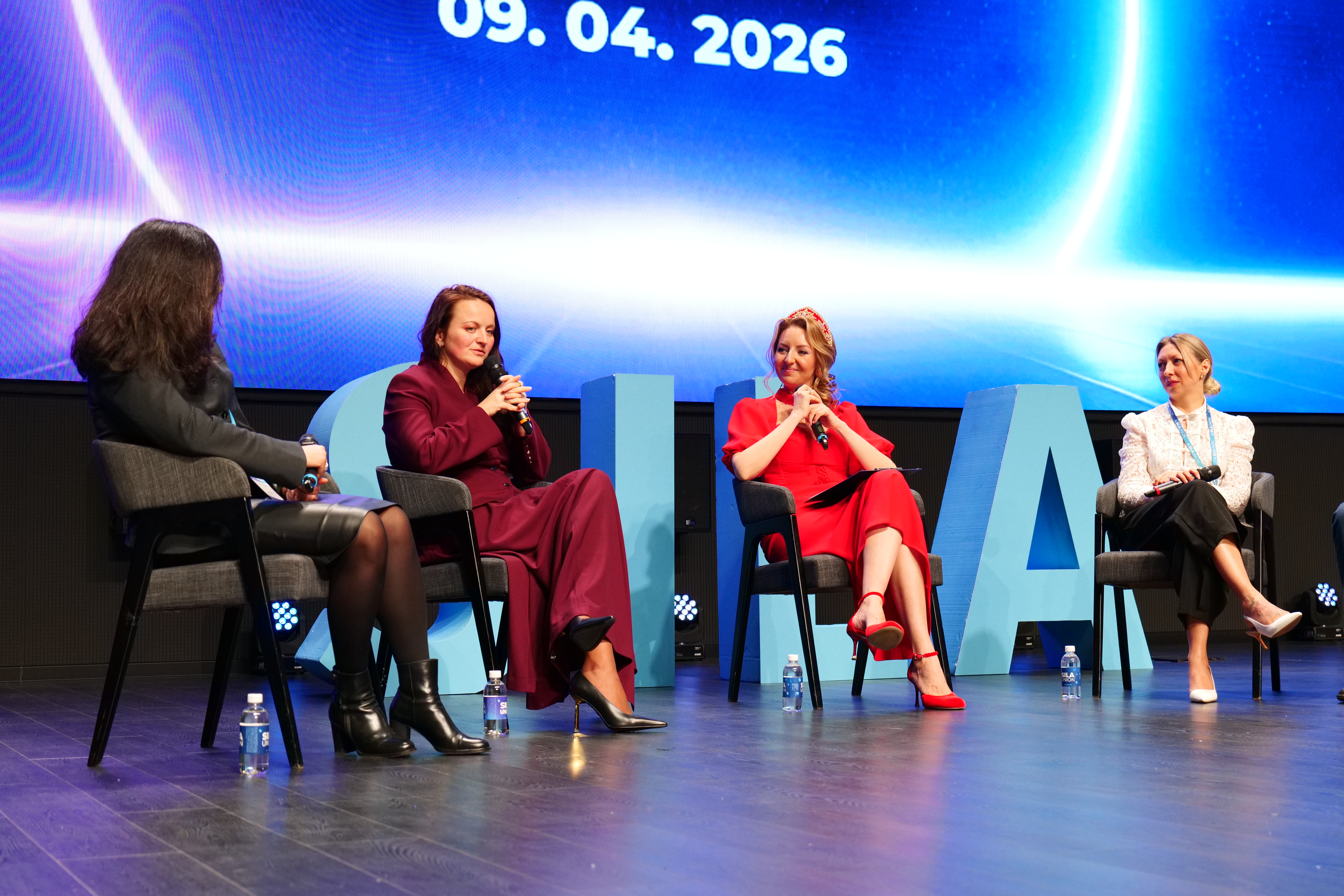
The round table "Corporate Architecture and the Process Approach in the age of AI" brought together leaders and representatives of major companies and government agencies that work with real transformations and implement technologies in large-scale management systems. The discussion was attended by:
— Sofia Savinova, Head of the Center for Business Analysis and Implementation of IT Systems at Gazprom CPS LLC,
- Vyacheslav Lapenkov, Head of the Project Activities Department at the Department of Urban Planning Policy of the City of Moscow,
— Ekaterina Izmalkova, expert in the field of process management at Russian Railways,
— Anton Antipin, Head of Business Set, Partner at SILA Union,
— Evgenia Vesnitskaya, Chief architect of the RHYTHM,
— The moderator was Elena Silkina, founder of SILA Union.
Against the background of the active development of AI and the growing number of digital initiatives, business is reaching a new level of challenges. The participants discussed how to build a company's architecture for working with AI, what factors ensure the success of projects, which processes it is advisable to start automation with, and how to evaluate the effect of technology implementation. Special attention was paid to the human role, the distribution of responsibility and the management of AI initiatives within the organization.

The foundation of implementation: architecture, data and people
The experts agreed that a sustainable result is achieved by relying on a system framework — corporate architecture, high-quality data and trained teams.
Elena Silkina emphasized that AI enhances processes and reveals the potential of the system. Architecture and the digital twin make it possible to see relationships, find growth points, and design effective technology application scenarios.
The key issue remains data. Evgenia Vesnitskaya noted the importance of their structure and accessibility to work. The formation of uniform rules for modeling, data management and the use of AI becomes the basis for scalable solutions.
Sofia Savinova has added an information security factor, especially critical for large and sensitive industries. Vyacheslav Lapenkov focused on people: to implement AI, it is necessary to train teams and audit competencies. Anton Antipin added that corporate culture is also important — a common understanding of the role of AI within the company.
The role of AI: strengthening the team and a new format of work
AI becomes a full-fledged participant in work processes and enhances the capabilities of specialists.
Ekaterina Izmalkova suggested that AI be perceived as a new member of the team, as a tool that reveals the value of correctly set tasks. The effective way is to launch through specific business cases followed by scaling.
Practice shows that AI is changing the nature of work. According to Evgenia Vesnitskaya, AI expands the amount of available information and enhances the depth of problem solving.
Elena Silkina noted an increase in the speed of changes and requirements for specialists: Today, mastery of AI tools is becoming a core competence. As an example, she cited marketing tasks that used to take weeks, but are now solved in a matter of minutes.
Where to start and how to evaluate the result
Experts emphasized that automation should focus on individual operations within processes — this allows you to get results faster and scale successful solutions.
Evgenia Vesnitskaya recommended using process analysis tools to select automation points. Vyacheslav Lapenkov gave practical examples from Moscow's urban infrastructure: biometric access control on construction sites, monitoring sensors, remote control of equipment and video analytics systems.
When evaluating the effectiveness of AI implementation, participants identified three key indicators: economy, speed, and quality. Ekaterina Izmalkova added that consistency is becoming a crucial factor: a holistic architecture allows you to accurately prioritize automation and achieve sustainable results.
Who controls the AI?
The question of the owner of AI initiatives does not have a universal answer, it is solved through the synergy of functions within the company.
Sofia Savinova noted that the party with the budget is often the driver. Evgenia Vesnitskaya emphasized the importance of competencies and the ability to take into account the interests of business, IT and users.
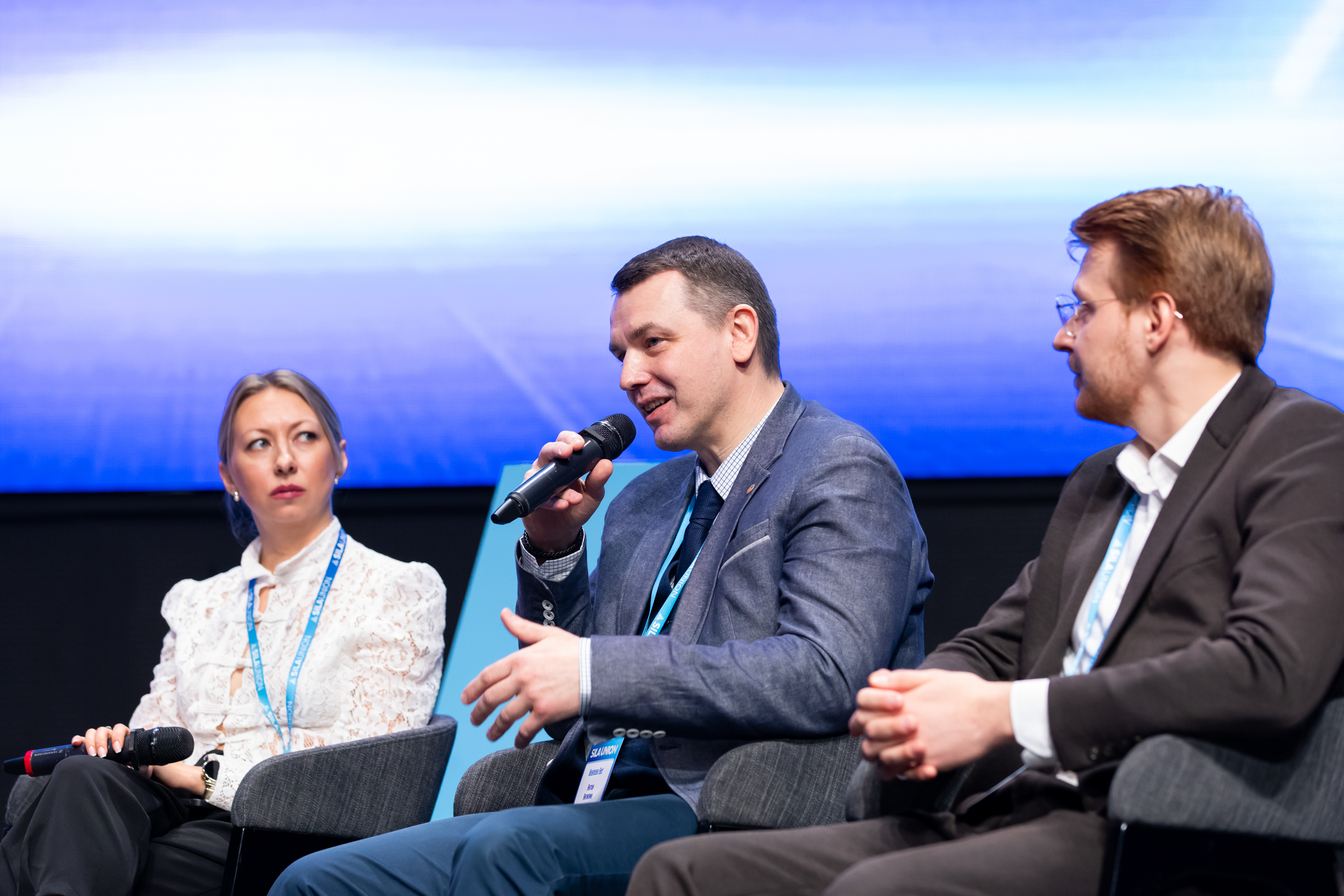
Anton Antipin emphasized the importance of interaction between developers and businesses: this is what makes it possible to create in-demand and effective solutions.
To summarize, Elena Silkina outlined the key logic: a systematic approach to architecture, data, and processes forms the basis for successful AI development. Companies that invest in these areas get a steady effect and manageable growth.
Conclusions
The panel discussion showed that the introduction of AI is a complex management task and part of the organization's system management. The result is achieved with a built-in architecture, high-quality data, trained teams and clear rules for working with technologies.
AI enhances business, increases the speed and quality of solutions, and opens up new opportunities for growth and transformation. Effective AI management is based on understanding business objectives and integrating all participants in the process into a single system.